Fallom vs qtrl.ai
Side-by-side comparison to help you choose the right tool.

Fallom provides real-time insights into AI calls for tracking costs and efficient debugging of your AI operations.
Last updated: February 28, 2026

qtrl.ai
Scale your QA testing with AI agents while keeping full control and oversight.
Last updated: March 4, 2026
Visual Comparison
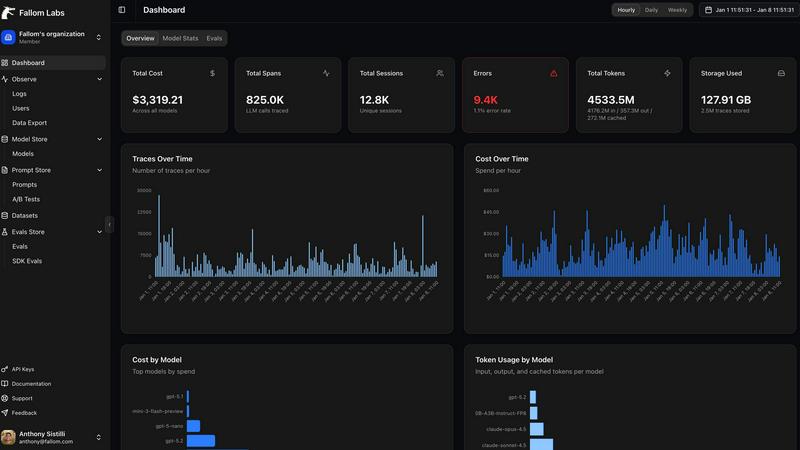
Fallom
qtrl.ai
Feature Comparison
Fallom
Real-Time Observability
Fallom offers real-time observability for AI agents, allowing users to track tool calls and analyze their timing. This feature enables developers to debug with confidence, helping them understand exactly what happens during each interaction and ensuring smoother AI operations.
Cost Attribution
With Fallom, organizations can track spending on a per-model, per-user, and per-team basis. This feature provides full cost transparency, making it easier for teams to manage their budgets and allocate resources effectively, ensuring they know where their AI expenditures are going.
Complete Audit Trails
Fallom maintains comprehensive audit trails that log every LLM interaction, ensuring that organizations can meet their regulatory requirements. Features like input/output logging and model versioning help businesses maintain compliance with standards such as SOC 2 and GDPR.
Session Tracking
This feature groups traces by session, user, or customer, providing complete context for each interaction. With session tracking, teams can dive deeper into user behavior and understand how different users engage with their AI applications, making it easier to optimize performance.
qtrl.ai
Enterprise-Grade Test Management
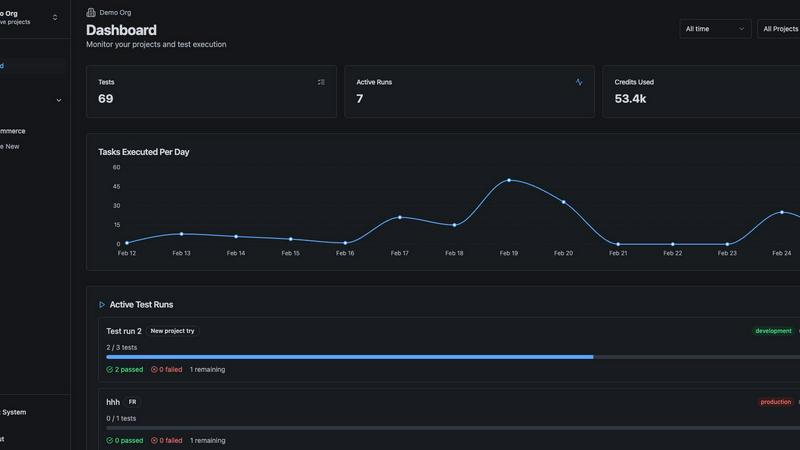
qtrl provides a robust, centralized foundation for all your QA activities. You can create, organize, and manage test cases, plan comprehensive test runs, and trace everything back to specific requirements. This ensures full visibility and creates detailed audit trails, which is essential for teams that need to meet compliance standards. It supports both manual testing workflows and automated processes, all in one organized place.
Progressive AI Automation
This feature allows you to adopt AI at your own pace. You can start by writing simple, high-level test instructions in plain English, and qtrl will execute them precisely. As you gain confidence, you can let qtrl's AI suggest and generate automated tests for you. Every AI-generated step is fully reviewable and editable, so you maintain complete oversight and control throughout your automation journey.
Autonomous QA Agents
qtrl's AI-powered agents act like intelligent team members that can execute testing tasks. You can instruct them to run tests on-demand or set them to run continuously. They operate across multiple browsers and real environments—not simulations—following the rules and permissions you set. This allows you to scale your test execution massively without a proportional increase in manual effort.
Adaptive Memory & Governance
The platform builds a living knowledge base of your application by learning from every test run, exploration, and identified issue. This "Adaptive Memory" makes test generation smarter and more context-aware over time. Crucially, all this happens within a governance-first framework. You have full visibility into agent actions, can set permission levels, and your secrets are kept encrypted and secure, never exposed to the AI.
Use Cases
Fallom
Debugging AI Responses
When an AI agent provides an unexpected or incorrect answer, developers can use Fallom to trace back through the LLM calls and tool interactions leading up to that response. This capability allows them to quickly identify and resolve issues, improving the overall reliability of their applications.
Budget Management
Fallom empowers organizations to monitor their AI spending in real-time. By tracking costs on a granular level, teams can make informed decisions about resource allocation and budget adjustments, ensuring that they stay within financial boundaries while maximizing AI effectiveness.
Compliance and Regulatory Support
For organizations operating in regulated industries, Fallom provides the necessary tools to maintain compliance with various regulations. With detailed audit trails and user consent tracking, businesses can confidently navigate the complexities of compliance, mitigating risks associated with data privacy.
Model Performance Evaluation
Fallom enables teams to run evaluations on their LLM outputs, catching regressions before deploying updates to production. By assessing accuracy, relevance, and potential hallucinations, developers can ensure that their AI models continue to perform at the highest standards.
qtrl.ai
Scaling Beyond Manual Testing
For QA teams overwhelmed by repetitive manual checks, qtrl offers a smooth path forward. Teams can begin by structuring their existing manual test cases in the platform. Then, they can progressively automate the most tedious and high-value tests using AI, freeing up human testers to focus on more complex, exploratory work and significantly increasing test coverage and speed.
Modernizing Legacy QA Workflows
Companies stuck with outdated, siloed, or script-heavy automation frameworks can use qtrl to consolidate and modernize. The platform brings test management and execution into a single, user-friendly interface. Teams can gradually replace brittle scripts with AI-generated tests that are easier to maintain, reducing the long-term cost and complexity of test automation.
Ensuring Governance in Enterprise QA
Enterprises in regulated industries (like finance or healthcare) that require strict audit trails and compliance can trust qtrl. The platform provides full traceability from requirements to test execution, detailed logs of all AI agent activities, and enterprise-grade security. This allows large organizations to harness the power of AI for QA without sacrificing the control and documentation they need.
Supporting Product-Led Engineering Teams
Fast-moving product teams that need to ensure quality with every release can integrate qtrl into their CI/CD pipelines. Developers and QA can collaborate in one platform to create tests, get continuous quality feedback, and run automated checks across multiple environments. This helps ship features faster with confidence, maintaining a high bar for quality.
Overview
About Fallom
Fallom is an innovative observability platform tailor-made for the rapidly evolving landscape of artificial intelligence. Designed for developers and engineering teams working with Large Language Models (LLMs) and autonomous AI agents, Fallom provides a comprehensive solution that enhances transparency and control over AI operations. This powerful tool enables users to capture and analyze every interaction, from the prompts sent to the responses received, along with detailed information on tool calls, token usage, latency, and costs. By transforming what was once a black-box process into a clear and manageable system, Fallom allows teams to quickly diagnose issues, monitor real-time usage, and optimize their AI deployments. With features built on the open OpenTelemetry standard, Fallom ensures a smooth setup experience without vendor lock-in, making it accessible for organizations of all sizes. Additionally, enterprise-ready functionalities like audit trails, model versioning, and consent tracking help businesses comply with regulations like GDPR and the EU AI Act. Fallom truly empowers teams to harness the full potential of their AI technologies while keeping costs in check.
About qtrl.ai
qtrl.ai is a modern, intelligent QA platform designed to help software teams scale their quality assurance efforts the smart way. It's built for teams who are tired of choosing between slow, manual testing and complex, brittle automation. qtrl provides a single, centralized hub where you can organize all your test cases, plan detailed test runs, and see exactly how your testing maps back to requirements. This gives engineering leads and QA managers crystal-clear visibility into what's been tested, what's passing, and where potential risks might be hiding.
What truly sets qtrl apart is its thoughtful, progressive approach to AI. Instead of forcing you into a risky "black-box" AI system from day one, qtrl lets you start simple with solid test management. When you're ready, you can gradually introduce powerful, trustworthy AI automation. The platform's autonomous agents can generate real browser tests from plain English instructions, keep those tests updated as your application changes, and run them at scale. This makes qtrl perfect for product-led engineering teams, QA groups moving beyond manual processes, companies modernizing old workflows, and any enterprise that needs strict compliance and audit trails. Ultimately, qtrl bridges the gap, offering a trusted, controlled path to faster and more intelligent quality assurance.
Frequently Asked Questions
Fallom FAQ
What is Fallom used for?
Fallom is an observability platform designed for AI applications, particularly those using Large Language Models. It captures detailed data on LLM interactions, helping teams monitor performance, debug issues, and manage costs effectively.
How does Fallom support compliance?
Fallom provides features like complete audit trails and user consent tracking, ensuring that organizations can meet regulatory requirements such as GDPR and the EU AI Act. This support helps businesses navigate compliance challenges confidently.
Can I use Fallom with any AI provider?
Yes, Fallom is built on the open OpenTelemetry standard, which means it is compatible with all AI providers. You can set it up quickly with a single SDK, ensuring flexibility without vendor lock-in.
How does Fallom help with debugging?
Fallom captures every LLM call and tool interaction, allowing developers to trace back through the sequence of events leading to an AI agent's response. This visibility aids in diagnosing issues and improving the reliability of AI applications.
qtrl.ai FAQ
How does qtrl.ai's AI work? Is it a "black box"?
No, qtrl is designed to be transparent and trustworthy. Its AI does not make hidden decisions. When it generates test steps from your instructions, you can see, review, and edit every single action it proposes. You have full visibility into what the autonomous agents are doing, and they operate only within the rules and permissions you define, ensuring you are always in control.
Can I use qtrl if my team only does manual testing right now?
Absolutely! qtrl is built for progression. You can start by using it as a powerful test management tool to organize your manual test cases, plans, and runs. When you feel ready to explore automation, the AI features are right there for you to start using gradually. There's no need to change your entire process overnight.
What kind of tests can the Autonomous QA Agents run?
The agents run real, end-to-end tests in actual browser environments (like Chrome or Firefox). They interact with your web application just like a human would—clicking buttons, filling forms, and validating content. They are not simulations, so you get accurate results that reflect the true user experience across different browsers and test environments.
How does qtrl handle security and sensitive data?
Security is a top priority. qtrl uses enterprise-ready security practices. Sensitive data like passwords and API keys are stored as encrypted environment variables and secrets. Crucially, these secrets are never exposed to or accessible by the AI agents during test execution, keeping your sensitive information completely safe.
Alternatives
Fallom Alternatives
Fallom is a specialized observability platform designed for managing AI applications, particularly those using Large Language Models (LLMs) and autonomous agents. It provides developers and engineering teams with a comprehensive way to track interactions, debug issues, and manage costs effectively in real-time. Users often seek alternatives to Fallom for various reasons, including pricing concerns, specific feature requirements, or compatibility with their existing platforms. When looking for an alternative, consider factors such as the level of detail in monitoring capabilities, user interface intuitiveness, compliance features, and overall scalability. It’s essential to evaluate how well the alternative meets your specific needs, particularly in tracking AI costs and ensuring operational transparency.
qtrl.ai Alternatives
qtrl.ai is a modern QA platform in the automation and dev tools category. It helps software teams scale their testing efforts by combining structured test management with intelligent AI agents. This approach allows teams to automate tests while maintaining full control and governance over the entire quality assurance process. Users often explore alternatives for various reasons. These can include budget constraints, the need for different feature sets, or specific platform requirements like integration with existing tools. Some teams might be looking for a simpler entry point or a solution tailored to a very niche testing methodology. When evaluating different options, it's wise to consider a few key areas. Look at how the platform balances automation power with ease of use and control. Check if it can grow with your team's needs and whether it provides the visibility and reporting that your managers require. The right fit should align with your team's current workflow while offering a clear path to more advanced testing.