CCAPI vs HookMesh
Side-by-side comparison to help you choose the right tool.

CCAPI
CCAPI is your all-in-one AI API gateway for seamless access to diverse AI services without wait times or interruptions.
Last updated: February 26, 2026

Effortlessly manage reliable webhook delivery with automatic retries and a self-service portal for your customers.
Last updated: February 26, 2026
Visual Comparison
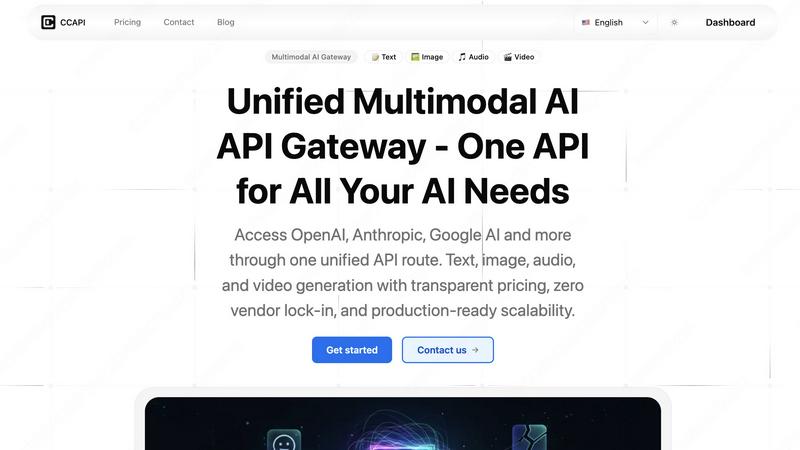
CCAPI
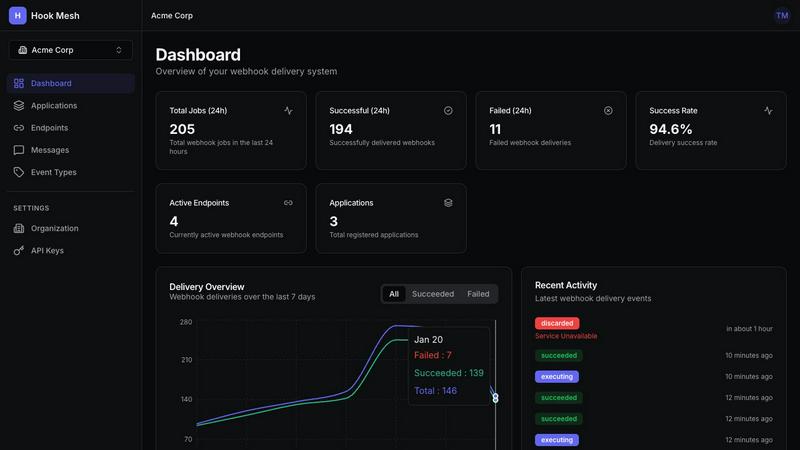
HookMesh
Feature Comparison
CCAPI
Unified API Access
CCAPI provides a single API endpoint for accessing various AI models across multiple modalities. This means developers can generate text, images, audio, and video with just one implementation, simplifying their workflow and reducing the need for multiple integrations.
Smart Routing Technology
This feature ensures that your requests remain uninterrupted. In the event of a provider failure, CCAPI automatically switches to a backup provider in real time, maintaining application stability and reliability while minimizing downtime.
Developer-Friendly Integration
CCAPI is designed with developers in mind, featuring OpenAI-compatible endpoints that allow easy integration with existing applications. By simply changing the base URL, developers can immediately start using CCAPI without any significant changes to their codebase.
Real-Time Monitoring and Analytics
Developers can access a detailed dashboard that provides real-time metrics on usage, costs, latency, and success rates. This transparency helps developers optimize their applications and budget effectively, ensuring they get the most out of their investment in AI services.
HookMesh
Reliable Delivery
HookMesh ensures that no webhook is ever lost through a combination of automatic retries, exponential backoff, and circuit breakers. This means that if an endpoint fails, HookMesh will automatically retry delivery up to 48 hours, preventing any critical data loss.
Customer Portal
The self-service customer portal allows users to manage their own webhook endpoints with ease. Customers can add or modify their endpoints, view detailed delivery logs, and replay any failed webhooks with a single click, enhancing their overall experience and control.
Developer Experience
HookMesh provides a fantastic developer experience with a REST API and official SDKs for popular programming languages like JavaScript, Python, and Go. This allows developers to integrate webhook functionality quickly and easily, enabling them to send events from their applications with minimal effort.
Integration in Minutes
Integrating HookMesh is straightforward and fast. With just a few lines of code, developers can install the SDK, initialize it with their API key, and start sending webhook events. HookMesh takes care of delivery, retries, and failures, allowing developers to focus on other important tasks.
Use Cases
CCAPI
Content Creation
With CCAPI, content creators can generate high-quality text, images, and videos for blogs, marketing campaigns, and social media posts, streamlining their creative process and enhancing productivity.
Application Development
Developers can build applications that leverage advanced AI capabilities for tasks such as chatbots, virtual assistants, and recommendation systems. The unified API simplifies integration, allowing developers to focus on functionality rather than managing multiple APIs.
Multimedia Projects
CCAPI is ideal for projects that require multimedia content, enabling creators and developers to generate engaging videos, audio clips, and visual assets efficiently, all from a single API endpoint.
Research and Data Analysis
Researchers can utilize CCAPI to access diverse AI models for text analysis, data processing, and even generating reports, helping them quickly derive insights and enhance their research capabilities.
HookMesh
E-commerce Order Notifications
An e-commerce platform can use HookMesh to send real-time notifications about order status updates to customers. This ensures that customers are always informed about their purchases, enhancing their shopping experience.
SaaS Application Integrations
A SaaS application can leverage HookMesh to deliver webhook events to third-party integrations, enabling seamless data exchange between services. This boosts operational efficiency and enhances the functionality of the SaaS product.
Automated Reporting
Businesses can utilize HookMesh to automate the delivery of reports and analytics to stakeholders. With reliable webhook delivery, decision-makers receive timely insights without the hassle of manual distribution.
Payment Processing Updates
Online payment processors can employ HookMesh to send transaction updates to merchants instantly. This capability helps merchants stay informed about payment statuses, leading to better cash flow management and improved customer service.
Overview
About CCAPI
CCAPI is a powerful and comprehensive API solution designed for developers seeking unified access to a wide range of AI capabilities. With instant connectivity to leading AI providers such as OpenAI, Anthropic, and Google AI, CCAPI serves as a multimodal gateway for generating text, images, audio, and video. Its primary value proposition lies in its seamless integration and reliability; developers can leverage multiple AI models through a single endpoint while maintaining a high success rate of 99.9%. The smart routing feature ensures that if one provider experiences downtime, requests are automatically redirected to another provider without any disruption. This makes CCAPI an ideal choice for developers looking to build robust applications that require diverse AI functionalities without the hassle of managing multiple APIs. By simplifying the process of integrating AI, CCAPI empowers developers to focus on creating innovative solutions.
About HookMesh
HookMesh is a groundbreaking solution that streamlines webhook delivery for modern SaaS applications. Designed to tackle the common hurdles associated with in-house webhook implementation, it alleviates the technical burdens of retry logic, circuit breakers, and debugging delivery problems. By adopting HookMesh, businesses can redirect their focus towards enhancing their core products rather than getting caught up in the complexities of webhook management. The platform boasts a robust, battle-tested infrastructure that guarantees reliable webhook delivery through features like automatic retries, exponential backoff, and idempotency keys. This makes HookMesh the perfect choice for developers and product teams eager to provide a seamless experience for their customers while ensuring that webhook events are consistently and reliably delivered. With a user-friendly self-service portal, HookMesh empowers customers to manage their endpoints effortlessly and allows instant replay of failed webhooks with just one click, offering peace of mind for organizations striving to create an efficient webhook strategy.
Frequently Asked Questions
CCAPI FAQ
What is CCAPI?
CCAPI is a unified API platform that connects developers to multiple AI providers for text, image, audio, and video generation. It simplifies access to diverse AI capabilities through a single endpoint.
How does CCAPI ensure reliability?
CCAPI uses smart routing technology to automatically switch between providers in case of failure, ensuring that requests are always fulfilled and minimizing downtime for applications.
Is CCAPI easy to integrate with existing applications?
Yes, CCAPI is designed for easy integration. Developers can switch to CCAPI by simply changing the base URL in their existing code, making it a hassle-free transition.
What kind of monitoring does CCAPI provide?
CCAPI offers a real-time usage dashboard that tracks costs, latency, and success rates, providing developers with insights to optimize their AI usage and application performance.
HookMesh FAQ
What is HookMesh?
HookMesh is a webhook delivery solution designed for modern SaaS products, simplifying the process of managing webhooks while ensuring reliable delivery through advanced features.
How does HookMesh handle failed deliveries?
HookMesh employs automatic retries with exponential backoff and circuit breakers to manage failed deliveries. This ensures that webhooks are retried intelligently over an extended period, reducing the risk of lost data.
Can customers manage their own endpoints?
Yes, HookMesh provides a self-service portal where customers can easily manage their webhook endpoints, view delivery logs, and replay failed webhooks with just one click.
What programming languages does HookMesh support?
HookMesh offers official SDKs for popular programming languages including JavaScript, Python, and Go, making it easy for developers to integrate the service into their applications.
Alternatives
CCAPI Alternatives
CCAPI, or the Unified Multimodal AI API Gateway, is an innovative solution designed for developers seeking a streamlined way to access various AI technologies. By consolidating multiple services like OpenAI, Anthropic, and Google AI into one API, it simplifies the process of generating text, images, audio, and video. This makes it easier for developers to integrate advanced AI capabilities into their applications without juggling multiple APIs. However, users often seek alternatives to CCAPI due to factors such as pricing, specific features, or unique platform requirements. When considering an alternative, it's essential to evaluate the pricing structure, integration capabilities, available features, and user support. Ensuring that any alternative meets your specific needs can lead to better performance and satisfaction in your development projects.
HookMesh Alternatives
HookMesh is a powerful solution designed to streamline webhook delivery for SaaS applications. It fits within the development category, addressing common challenges such as retry logic, debugging, and managing webhook events effectively. As businesses increasingly rely on webhooks for real-time communication, many users seek alternatives to HookMesh for various reasons, including pricing constraints, specific feature sets, or compatibility with their existing platforms. When looking for an alternative, it’s essential to consider factors such as reliable delivery mechanisms, user-friendly management interfaces, and the ability to handle retries and errors effectively. Additionally, evaluating the customer support and documentation offered by the alternative can help ensure a smooth transition and implementation process.